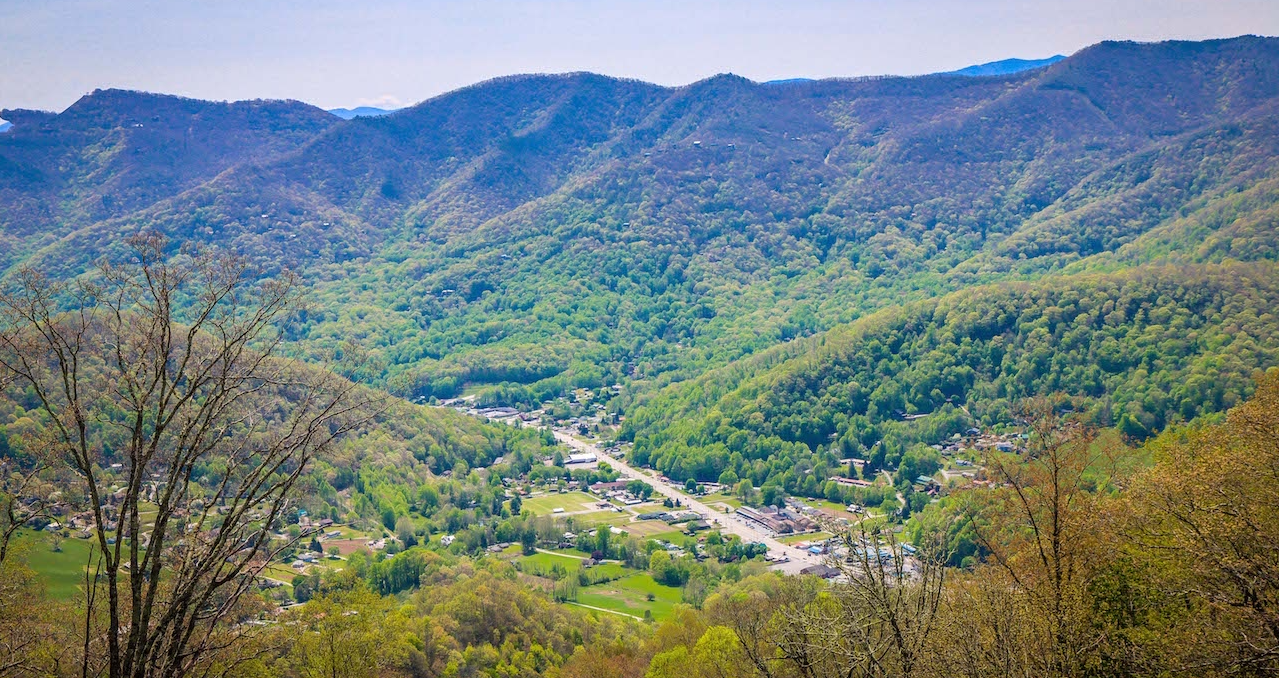
 The Dellwood area is a quiet, rural community located
northwest of Waynesville along the Jonathan Creek valley. Originally inhabited
by the Cherokee, the valley evolved into a vital agricultural and trade route,
and later became a prime destination for early 20th-century mountain tourists.
The Dellwood area is a quiet, rural community located
northwest of Waynesville along the Jonathan Creek valley. Originally inhabited
by the Cherokee, the valley evolved into a vital agricultural and trade route,
and later became a prime destination for early 20th-century mountain tourists.
Early Cherokee Presence:
For thousands of years prior to European settlement, Indigenous peoples and the Cherokee utilized the valley's abundant resources.
The Settler Era:
The first Euro-American settlers arrived in the late 1700s.The creek and the surrounding valley take their name from Jonathan McPeters, one of the earliest settlers who arrived in 1788. Early mountain pathways, like the one winding up Jonathan Creek, roughly followed old Indigenous trails. After the American Civil War, the area was formally organized into the Jonathan Creek Township in 1869.
Farming and the Stagecoach
Days:
The valley's rich, level soil made it a prime location for small family farms. Early dirt roads were carved into the rugged landscape to connect Waynesville to Soco Gap (present-day US-19), allowing farmers to bring their livestock and crops to market. Methodist circuit riders (traveling pastors on horseback) used these roads in the early 1800s to preach in log chapels along the creek.
The Rise of Tourism and
Modern Highways:
Starting in the 1880s, Waynesville grew as a tourist haven thanks to the arrival of the Western North Carolina Railroad. Tourists would take the train to Waynesville and then travel by wagon or early automobiles up into the Jonathan Creek and Dellwood areas to enjoy cooler mountain air and scenic retreats. In 1936, the state paved what was then State Highway 284 (now US-19). This paving project brought an influx of new construction, more tourists, and seasonal cabin rentals to Dellwood.
Today, the valley serves as a scenic, outdoor recreation hub
famous for trout fishing in Jonathan Creek. It bridges the gap between
Waynesville and Maggie Valley.
